Riptidez LLC
LL-37
LL-37
Create a research account to view pricing
Login to view pricing✔ Flat $10 U.S. shipping • Ships within 24 hours
Login to purchase research materials
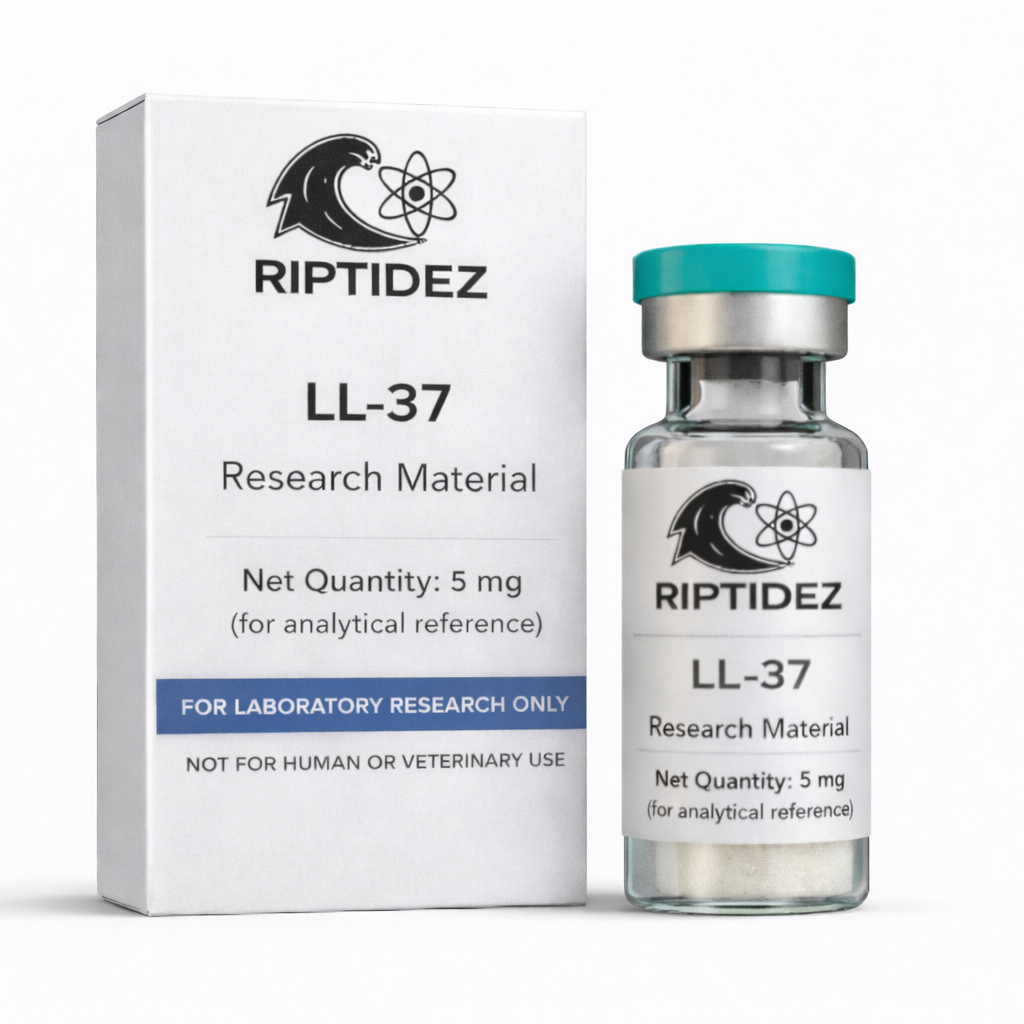
Login to purchase✔ For laboratory research use only ✔ Ships within 24 hours (U.S. fulfillment) ✔ Secure checkout & discreet packaging ✔ ✔ Clearly labeled vial with quantity displayed Not for human or veterinary use
LL-37 Research Overview
LL-37 is a naturally occurring antimicrobial peptide derived from the human cathelicidin protein (hCAP-18). It is widely studied in laboratory settings for its role in immune signaling, antimicrobial defense mechanisms, and tissue repair pathways.
In research environments, LL-37 is frequently examined for its involvement in host defense responses, inflammatory signaling modulation, and cellular communication within epithelial and immune tissues.
Key Research Areas
- Innate immune system signaling
- Antimicrobial peptide activity
- Skin and epithelial tissue research
- Inflammatory pathway modulation
- Cell migration and wound repair signaling
Scientific Background
LL-37 is part of the human cathelicidin peptide family and is produced by various immune and epithelial cells. Researchers study LL-37 because of its ability to interact with bacterial membranes, influence immune signaling, and participate in tissue repair processes.
Laboratory studies have explored how LL-37 may affect microbial defense mechanisms and how it interacts with cellular receptors involved in inflammation and tissue regeneration pathways.
Research Applications
Research involving LL-37 often focuses on understanding how antimicrobial peptides function in host defense systems and how they contribute to cellular communication during tissue stress or injury responses.
Studies frequently investigate LL-37 in relation to skin barrier integrity, immune signaling cascades, and the regulation of inflammatory mediators in experimental laboratory models.
Storage and Handling
- Store lyophilized material in a cool, dry environment
- Refrigeration is commonly recommended for research storage
- Avoid repeated freeze-thaw cycles in laboratory settings
- Handle using proper laboratory safety procedures
Research Disclaimer
This material is intended for laboratory research and analytical reference purposes only. Products offered by Riptidez are not intended for human or veterinary use. Researchers should follow all applicable regulations and laboratory safety guidelines when handling research materials.
Share